
Google Ads for Doctors SEO Outline: A Guide to Getting More Patients

A patient searching for a family doctor, skin specialist, or dentist may be ready to book an appointment. Google Ads can help your clinic reach that patient at the right time. But paying for clicks does not mean you will get more bookings.
A clear Google Ads for Doctors SEO Outline helps you plan each part of your campaign before spending money. It covers keywords, local targeting, ad content, landing pages, budgets, and performance tracking. This guide explains how to build a campaign that brings relevant inquiries to your medical practice.
What Is a Google Ads for Doctors SEO Outline?
A Google Ads for Doctors SEO Outline is a campaign plan that connects paid search advertising with your medical website's SEO goals. It helps doctors target people looking for healthcare services in their area.
Google Ads can place sponsored listings in search results, while SEO helps your website gain visibility through unpaid results. Both methods serve different purposes, but they can support each other.
A complete plan should cover:
- Patient appointment goals and campaign objectives
- Local and service-related search keywords
- Relevant ads and dedicated landing pages
- Monthly advertising budget and bidding
- Healthcare advertising rules and patient privacy
- Appointment inquiries and conversion tracking
With these details in place, your clinic can make better decisions about where its advertising budget goes.
Why Google Ads Matter for Medical Practices
Patients often look online before choosing a healthcare provider. They may compare clinic locations, available services, doctor qualifications, and appointment options.
Google Ads for doctors can help your practice appear when someone searches for a service you offer. Unlike broad advertising, search ads can focus on people already looking for medical care.
Reach Patients Looking for Nearby Doctors
Location targeting helps you focus on people within your clinic's service area. You can select specific cities, areas, or a suitable radius instead of showing ads across an entire state or country.
Promote Services That Need More Appointments
A clinic may want more bookings for health checkups, dental consultations, or general medical visits. Separate campaigns can help direct the budget toward each service.
Measure Patient Inquiries
Google Ads provides data about clicks, spending, and eligible conversion actions. With privacy-safe tracking, you can review which campaigns generate useful inquiries and make improvements over time.
How to Create a Google Ads for Doctors SEO Outline
A useful Google Ads for Doctors SEO Outline starts with clear goals and follows a practical campaign setup process. Each step should help patients find the right service and contact your clinic without confusion.
Step 1: Set Clear Patient Acquisition Goals
Decide what you want your advertising campaign to achieve. Some clinics want more phone inquiries, while others want appointment requests through their websites.
Set goals based on your clinic's capacity. For example, if your practice can handle 20 additional consultations each month, use that figure to guide your initial campaign budget.
Focus on meaningful outcomes rather than clicks alone.
Step 2: Choose Relevant Medical Keywords
Keyword research helps your ads appear for searches related to your services. Start with terms that show clear intent to contact or visit a doctor.
Examples include:
- Family doctor near me
- Dermatologist in Delhi
- Pediatric clinic near me
- General physician appointment
- Dental clinic in Delhi
For effective medical PPC advertising, organize keywords by specialty and service. Keep unrelated treatments in separate ad groups.
Use negative keywords to avoid searches for jobs, medical courses, salaries, and services your clinic does not provide. Review search term reports regularly to find other irrelevant queries.
Step 3: Create Landing Pages for Each Service
Sending every visitor to your homepage can make booking harder. Instead, create a page for the specific service mentioned in each ad.
For example, a dermatology ad should lead to a dermatology page. The page should explain the service, introduce the doctor, display the clinic's location, and provide a clear booking option.
An effective medical practice landing page should include:
- A clear service heading
- Doctor qualifications and clinic information
- A visible appointment button
- Contact details and working hours
- Mobile-friendly design
- Clear information about consultation options
Keep forms short and avoid collecting unnecessary medical details through advertising-related tools.
Step 4: Write Clear and Trustworthy Medical Ads
Patients need accurate information before contacting a healthcare provider. Your ads should explain what your clinic offers without making promises about treatment results.
An example ad headline might be:
Family Doctor in Delhi | Book an Appointment
A supporting description could be:
Schedule a consultation with our medical team. View clinic hours, location, and available appointments.
Only advertise services, qualifications, and availability that your clinic can verify. Avoid claims such as guaranteed cures or certain recovery.
Step 5: Set Location and Device Targeting
Most local clinics serve patients from nearby communities. Limit your campaigns to areas where patients can reasonably visit your practice.
Review location settings carefully to reduce exposure to people outside your target area. You should also check mobile performance, since patients may want to call or book directly from their phones.
Schedule your ads around clinic availability when staff assistance is important. Online booking campaigns may continue outside office hours if the system can accept requests.
Step 6: Set Up Reliable Conversion Tracking
A click tells you someone visited your website. It does not tell you whether that person booked an appointment.
Set up approved conversion tracking for suitable actions, such as general contact requests and permitted call events. Healthcare campaigns need particular care because appointment and treatment data can reveal sensitive medical information.
Your tracking plan must avoid sending protected health information or sensitive medical conversion details to advertising platforms.
Healthcare Advertising Rules Doctors Must Follow
Compliance should be part of every Google Ads for Doctors SEO Outline. Healthcare advertising comes with restrictions that may change based on the medical service and country.
Follow Google's Healthcare Advertising Policies
Google restricts certain healthcare services, prescription drug promotions, and medical claims. Some advertisers must obtain certification before their ads can run.
Review the official Google Healthcare and Medicines Policy before launching a campaign.
Protect Patient Information
Patient privacy matters just as much as ad performance. Never send sensitive medical details, diagnoses, or treatment information through Google Ads tracking or audience lists.
US-based practices must also assess HIPAA requirements. Other clinics should follow the privacy and healthcare advertising laws that apply in their locations.
Avoid Restricted Health-Based Targeting
Google limits personalized advertising involving sensitive health conditions. Do not assume you can create remarketing audiences from people visiting condition-specific treatment pages.
Use permitted contextual and search-based targeting instead. Review Google's personalized advertising rules when planning audience settings.
How Much Should Doctors Spend on Google Ads?
There is no fixed advertising budget that works for every clinic. Your costs depend on your specialty, location, keyword competition, and patient demand.
Start by estimating the number of inquiries needed and the amount you can afford to spend on each inquiry.
For example, the following figures are hypothetical planning scenarios, not industry benchmarks.
| Monthly Lead Goal | Estimated Cost per Lead | Monthly Ad Budget |
| 20 leads | ₹300 | ₹6,000 |
| 40 leads | ₹400 | ₹16,000 |
| 60 leads | ₹500 | ₹30,000 |
Your actual cost may be much higher or lower. These figures also exclude agency management fees.
Begin with a focused budget rather than advertising every service at once. Review results before increasing spending.
Choose the Right Bidding Strategy
Google Ads offers automated bidding options such as Maximize Conversions and Target CPA.
Choose a strategy based on your available conversion data and campaign goals. Do not rely on automated bidding to fix poor keywords, weak landing pages, or incorrect tracking.
Common Google Ads Mistakes Doctors Should Avoid
Even a carefully planned Google Ads for Doctors SEO Outline needs regular review. Small mistakes can waste money and prevent potential patients from reaching your clinic.
Using Keywords That Are Too Broad
A keyword such as "doctor" may attract people searching for information rather than appointments. More specific keywords can help match your ads to relevant searches.
Sending Every Click to the Homepage
Patients should not have to search through multiple pages to find the service mentioned in your ad. Send visitors to the most relevant page.
Ignoring Negative Keywords
Irrelevant searches can use your budget without generating useful inquiries. Check search terms often and exclude unsuitable traffic.
Failing to Review Appointment Inquiries
A campaign may generate many form submissions but few useful contacts. Review suitable, privacy-safe performance data alongside your clinic's internal booking records.
Making Unverified Medical Claims
Claims about guaranteed results can harm trust and create advertising policy problems. Use accurate information about your services and qualifications.
Google Ads vs SEO for Doctors: Which Is Better?
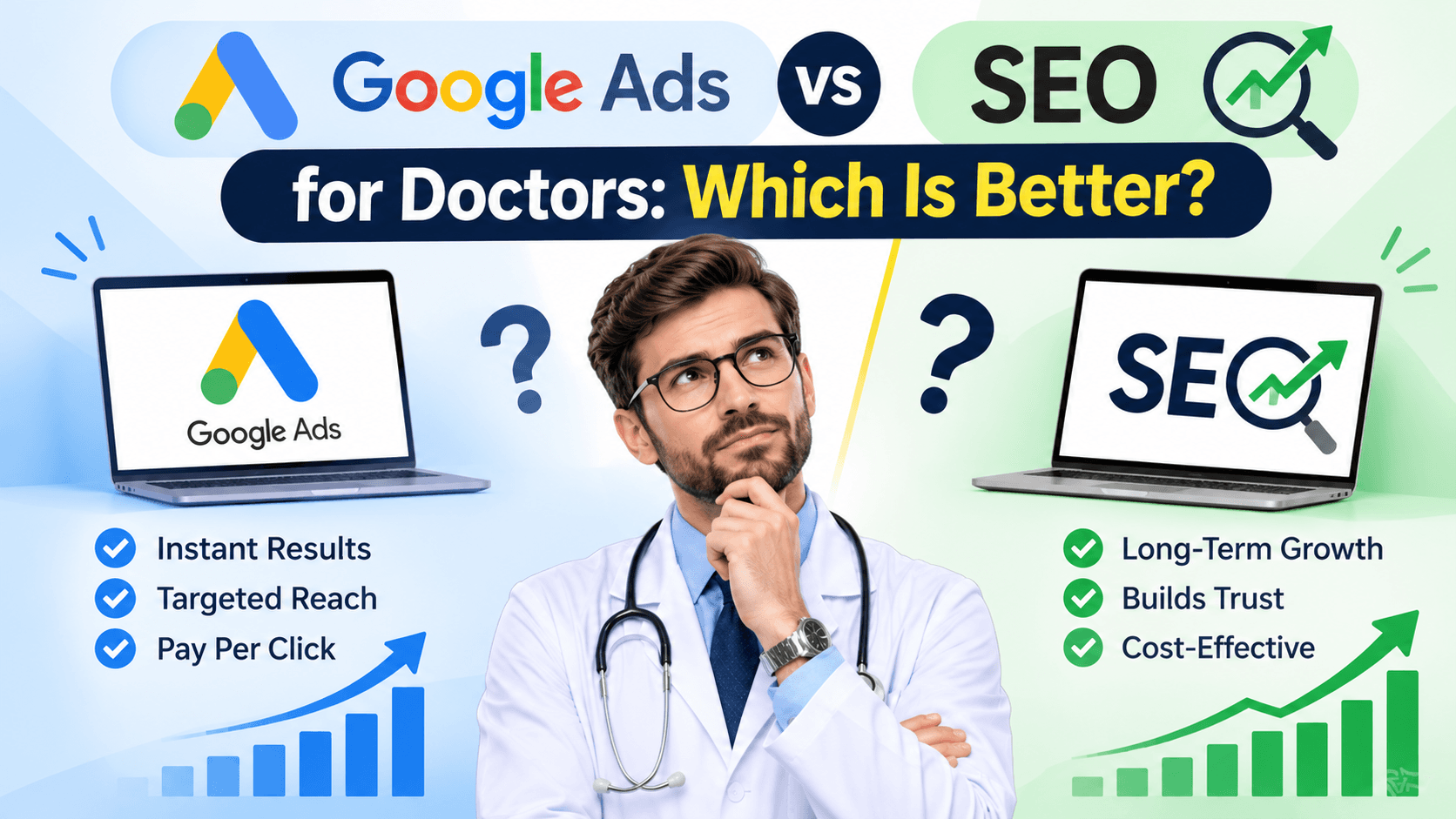
A complete Google Ads for Doctors SEO Outline should explain how paid and organic search support patient acquisition.
| Factor | Google Ads | SEO |
| Visibility | Paid ad placements | Organic search results |
| Traffic | Can begin after campaign approval | Often builds over time |
| Cost | Advertising spend | Ongoing optimization costs |
| Targeting | Keywords, location, and approved settings | Content and search relevance |
| Best use | Targeted appointment campaigns | Long-term website visibility |
SEO for doctors helps build useful service pages, improve website structure, and strengthen local search visibility. Paid ads help promote selected services while that organic presence develops.
Using both channels can improve your reach across relevant searches. However, neither guarantees a specific ranking or number of appointments.
How Aasman Digitals Can Help Medical Practices
Managing healthcare ads requires careful planning, clear reporting, and ongoing campaign improvements. Doctors also need time to focus on patients rather than checking advertising accounts every day.
Aasman Digitals offers Google Ads management services covering account audits, keyword planning, campaign structure, conversion tracking, and performance reporting.
Our approach focuses on connecting advertising spend with useful business outcomes. For healthcare campaigns, the strategy must also account for applicable privacy laws and advertising restrictions.
Whether you are opening a new clinic or improving an existing campaign, a well-planned advertising setup provides a stronger starting point.
FAQs About Google Ads for Doctors
1. What is a Google Ads for Doctors SEO Outline?
A Google Ads for Doctors SEO Outline is a written plan for promoting medical services through Google Ads while supporting website SEO. It covers keywords, budgets, targeting, landing pages, compliance, and performance measurement.
2. Can doctors use Google Ads to attract new patients?
Yes. Doctors can advertise eligible healthcare services on Google Ads. Campaigns must follow Google's healthcare policies, local advertising laws, and any relevant certification requirements.
3. How long does Google Ads take to work for a clinic?
Eligible ads can begin appearing after approval and campaign launch. However, generating useful inquiries and improving costs may take several weeks of testing and optimization.
4. Should a medical clinic invest in both Google Ads and SEO?
Both can be useful. Google Ads supports targeted paid visibility, while SEO helps build a longer-term presence in organic search results.
5. What is the best keyword strategy for a doctor's campaign?
Start with service-specific and location-based searches that match your clinic's offerings. Add negative keywords to reduce irrelevant clicks and review search term performance regularly.
Build a Better Patient Acquisition Plan
A strong Google Ads for Doctors SEO Outline helps your clinic plan campaigns that reach the right patients. With clear goals, relevant keywords, useful landing pages, and proper tracking, you can manage your advertising budget more effectively.
Review your campaigns regularly and keep your website information up to date. A well-planned strategy can help patients find your services and book appointments with ease.
Ready to Get More Patient Appointments with Google Ads?
Let Aasman Digitals help your medical practice reach local patients, reduce wasted ad spend, and generate more qualified appointment inquiries.
Contact Aasman Digitals Today to Start Growing Your Medical Practice with Google Ads.