Meta Ads: A Complete Guide for Businesses in 2026
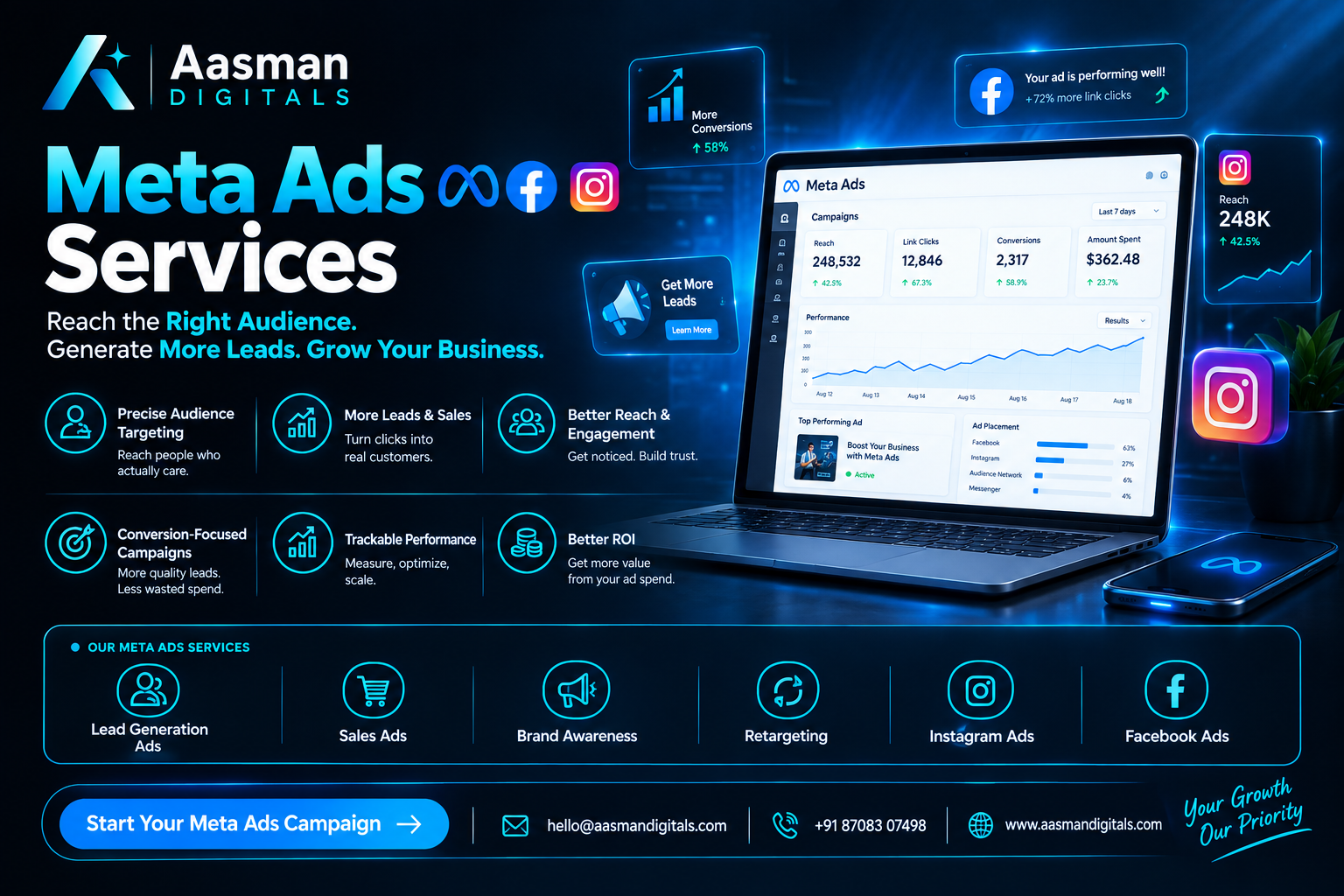
For many businesses, reaching the right customer is just as important as having a good product or service. Brands can reach a large audience on social media, but the organic approach is not necessarily sufficient to ensure sustainable growth. That's where Meta Ads can fit into a comprehensive digital marketing approach.
Meta advertising enables businesses to advertise their products, services, offers, and content on platforms like Facebook and Instagram. Advertisers can target their campaigns for a variety of purposes, including lead generation, website traffic, sales, content promotion, and more.
The advertising landscape remains focused on relevance in 2026, audience signals that provide utility to users, tracking conversions, and ongoing testing. Meta also offers tools that enable advertisers to control their placements and creative variations through Ads Manager.
What Are Meta Ads?
Meta ads are paid advertisements created through Meta's advertising system and shown across eligible Meta platforms and placements. Businesses can create campaigns based on a specific marketing objective and decide how they want their advertising budget to be used.
Unlike simply boosting a social media post, a properly structured campaign gives advertisers more control over campaign setup, audience strategy, creative assets, placements, budget, and measurement.
For example, an online store may run advertisements to encourage purchases, while a service business may use lead campaigns to collect enquiries. A local business could focus on reaching people in a particular location, while an established brand may use advertising to introduce a new product to a broader audience.
The important point is that advertising should start with a clear business goal rather than simply putting money behind a post.
What are the benefits of running a business using Meta Ads?
A major benefit of paying for social media advertising is the opportunity to get a company in front of people who don't already follow their page.
A brand that is introducing a product does not need to rely on its existing customers. It can be used to introduce the offer to new potential customers and reconnect with those who have already engaged with the business in some capacity, with the right campaign structure and approach.
There are also different stages of the customer journey that can be supported with the help of Meta advertising. Some campaigns can be used to help raise awareness, others can be used to drive traffic to a website, enquiries or purchases.
The diversity of the creatively presented formats is another important consideration. Images, videos, carousels, and short-form vertical content are all options for businesses to use, depending on the campaign and placement. Meta emphasizes that Reels is an advertising format created to be displayed on mobile devices, and offers creative optimisation in Ads Manager and Advantage+ placements.
How Do Meta Ads Work?
At a basic level, advertisers create a campaign, define what they want to achieve, select relevant audience and placement settings, prepare the advertising creative, and allocate a budget.
Meta's advertising system then determines when and where eligible ads are delivered based on the campaign settings and its delivery system.
This means advertising is not simply about paying more money to show an ad. The message, creative, audience signals, campaign objective, landing page experience, and conversion data can all influence how a campaign performs.
For businesses, this makes planning important. If the advertisement promises something that the landing page does not clearly provide, for example, users may leave without taking action even if the ad itself receives attention.
Choosing the Right Campaign Objective
Before launching Meta ads, businesses should decide what they actually want from the campaign.
A campaign designed to generate website visits should not necessarily be measured in the same way as a campaign designed to generate purchases. Similarly, a lead-generation campaign needs different success indicators from a campaign focused on video engagement.
Some common business goals include:
Building awareness around a brand or product
Driving relevant traffic to a website
Generating customer enquiries
Promoting products or offers
Increasing online purchases
Encouraging engagement with content
Promoting apps or other digital products
The objective should connect directly to the next step you want the customer to take.
Audience Targeting Matters
A strong advertisement shown to the wrong audience can still produce disappointing results.
Audience strategy should therefore be based on the actual customer profile. Consider factors such as location, age group, interests, previous interactions, purchasing behaviour, and the stage of the buying journey.
Businesses can also work with audiences based on previous interactions, depending on the available data and campaign setup. This can be useful when communicating with people who have already visited a website, engaged with content, or interacted with the brand.
At the same time, advertisers should avoid making their targeting unnecessarily complicated. Giving the platform useful signals while allowing enough room for delivery can be more practical than creating numerous small audience groups without enough data behind them.
Creative Can Make or Break a Campaign
People do not open Facebook or Instagram specifically to look at advertisements. Your ad has to earn attention while fitting naturally into the user's feed.
That is why creative deserves as much attention as campaign settings.
A good advertisement should communicate the main idea quickly. The visual should support the message, the copy should be easy to understand, and the call to action should make sense for the offer.
For short-form video, businesses should also think about mobile viewing. Meta recommends vertical 9:16 creative for Reels, with important messaging kept within the appropriate safe zone.
Instead of creating one advertisement and assuming it will work for everyone, businesses can test different hooks, visuals, offers, headlines, formats, and calls to action.
Budgeting for Meta Ads
There is no universal budget that works for every business.
A suitable advertising budget depends on factors such as the business model, target market, average order value, sales cycle, competition, conversion rate, and available data.
A small business may begin with a controlled testing budget, while an established company may have enough historical information to support larger campaigns.
The important thing is to avoid judging a campaign too quickly based on one metric. A low cost per click does not automatically mean the campaign is generating valuable customers. Similarly, a high click-through rate is not enough if those visitors do not take meaningful actions.
The final business goal should remain at the centre of performance analysis.
Measure the Metrics That Matter
When running Meta ads, businesses can easily get distracted by numbers that look impressive but do not necessarily translate into revenue.
Useful metrics depend on the campaign objective, but businesses commonly monitor indicators such as:
Reach and impressions
Click-through rate
Cost per click
Cost per lead
Conversion rate
Cost per acquisition
Return on ad spend
Purchases or qualified enquiries
The right combination of metrics gives a clearer picture of what is happening.
For example, if an advertisement receives plenty of clicks but produces very few enquiries, the problem may not be the advertisement alone. The landing page, offer, form, pricing, targeting, or customer journey could also need attention.
Testing and Optimising Your Campaigns
Successful advertising usually involves testing rather than relying on assumptions.
You might test two different opening hooks in a video, compare two images, change the headline, or experiment with a different call to action. The goal is to identify meaningful differences and use the findings to improve future campaigns.
Meta also provides A/B testing options for advertisers, while its advertising ecosystem supports different creative and placement approaches.
However, testing everything at once can make the results difficult to interpret. A more organised approach is to change one important variable at a time whenever practical and give the campaign enough data to produce a useful comparison.
Common Mistakes to Avoid
Several mistakes can make paid social campaigns unnecessarily expensive.
One is launching advertisements without defining a clear conversion goal. Another is using the same creative for every placement without considering how people consume content on different screens.
Ignoring the landing page is another common problem. An attractive ad cannot compensate for a confusing website or a weak offer.
Businesses should also avoid making constant changes without enough data. Frequent edits can make it difficult to understand whether a campaign is actually improving.
Finally, focusing only on likes, comments, or clicks can give an incomplete picture. Business results should be connected to the objective that the campaign was created to achieve.
What Should Businesses Focus on in 2026?
The role of Meta ads is becoming more closely connected with creative quality, automation, measurement, and the overall customer journey.
Meta's current advertising tools include AI-assisted features within its Advantage suite, while advertisers can also use different placements and creative formats to reach people across its ecosystem.
For businesses, this means the job is not simply to create an advertisement and wait for results. Campaigns need a clear strategy behind them.
Start with the customer. Understand what they need, what problem your product solves, and what might convince them to take the next step. Then build the campaign around that understanding.
Grow Your Business With Aasman Digitals
Running Meta ads effectively requires more than creating attractive advertisements. It takes proper campaign planning, audience research, creative development, conversion tracking, testing, and ongoing optimisation.
At Aasman Digitals, we help businesses build performance-focused paid social campaigns designed around their specific goals. From campaign strategy and audience planning to creative direction, tracking, testing, and optimisation, our approach focuses on connecting advertising activity with meaningful business outcomes.
If you are planning to start Meta advertising or want to improve the performance of your existing campaigns, talk to Aasman Digitals and build a strategy around your business goals.
Ready to turn your advertising budget into a more structured growth strategy? Get in touch with Aasman Digitals today.